In Ajax, Ontario, the term 'slopes' encompasses far more than just angled terrain; it represents a critical geotechnical discipline focused on the stability and safety of both natural hillsides and engineered earth structures. Our practice addresses the analysis, design, and remediation of slopes that can range from the bluffs overlooking Lake Ontario to the embankments supporting new residential subdivisions along Taunton Road. Understanding slope behavior is not merely an academic exercise here—it is a fundamental requirement for protecting property, infrastructure, and public safety against the risks of erosion, landsliding, and settlement. This category integrates subsurface investigation with advanced engineering principles to deliver solutions that stand up to Ajax's unique environmental demands.
The local geology of Ajax is dominated by the legacy of glacial Lake Iroquois, which left behind a complex stratigraphy of near-surface sands, silts, and stiff clay tills, often overlying the Ordovician-age bedrock of the Lindsay Formation. This surficial geology, particularly the sensitive Leda clay found in pockets across the region, presents distinct challenges. When saturated by heavy spring rains or rapid snowmelt, these soils can lose significant shear strength, triggering shallow slumps or deeper-seated rotational failures. A thorough slope stability analysis is therefore the essential first step in any project, allowing our engineers to quantify these risks by modeling the specific groundwater conditions and soil layers present on a site.
Any geotechnical work on slopes in Ajax must conform to the stringent requirements of the Ontario Building Code (OBC), specifically Section 4.2 on Foundations, and the standards set forth in the Canadian Foundation Engineering Manual (CFEM). These national and provincial documents dictate the minimum safety factors for both short-term and long-term stability, seismic loading considerations, and the necessary scope of site investigation. For public infrastructure projects, the guidelines from the Ministry of Transportation Ontario (MTO) also frequently apply. Our designs are not just recommendations; they are legally defensible engineering documents that demonstrate compliance with these governing codes, ensuring your project secures the necessary permits and approvals from the Town of Ajax and the Toronto and Region Conservation Authority (TRCA).
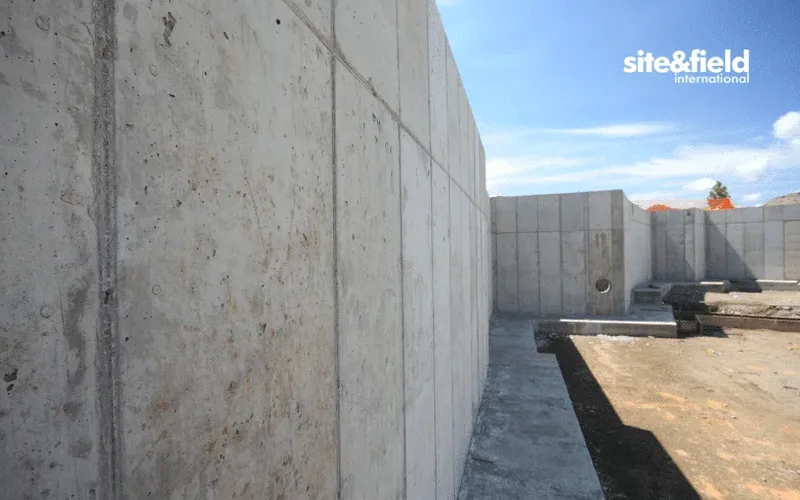
The need for slope engineering expertise in Ajax cuts across a wide spectrum of projects. It is paramount for custom home builders carving out walk-out lots on a ravine's edge, for municipal planners widening roadways like Westney Road through undulating terrain, and for commercial developers constructing stormwater management ponds that require stable perimeter embankments. In each case, the solution often involves more than just geometric regrading; it may incorporate structural elements like retaining wall design to create vertical grade separations where space is limited. For stabilizing deeper failure planes, particularly when remediating an existing landslide, the installation of active/passive anchor design systems provides a high-capacity tieback solution that reinforces the soil mass itself, locking it into competent ground beyond the failure surface. This integrated approach ensures that every slope, whether natural or man-made, performs reliably for its intended design life.
Questions and answers
What is the difference between a natural slope and an engineered slope, and why does it matter for my Ajax property?
A natural slope is formed by geological processes and may possess unknown safety margins, whereas an engineered slope is human-made or modified, designed to a specific minimum factor of safety per the Ontario Building Code. This distinction is critical because altering a natural slope, such as for a home addition, legally transfers the responsibility for its long-term stability to the property owner and designer, requiring a professional geotechnical assessment to manage the newly introduced risks.
When is a slope stability analysis required for a building permit application in Ajax?
The Town of Ajax and the TRCA typically mandate a slope stability analysis whenever a proposed structure or site alteration is within a defined hazard area, such as near a ravine, valley, or the Lake Ontario shoreline. The analysis must demonstrate a stable condition with acceptable factors of safety for both static and seismic conditions, as defined by the Ontario Building Code, to obtain permit approval.
What are the signs that a slope on my land might be failing or unstable?
Key indicators of potential instability include tension cracks in the ground surface parallel to the slope crest, leaning or bowed trees, sudden seepage of muddy water at the slope toe, and bulging soil at the base. For existing structures, new sticking doors or diagonal cracking in foundation walls can also signal slope movement and warrant immediate investigation by a qualified geotechnical engineer.
How does water affect slope stability in the Ajax area, and how is it managed?
Water is the most common trigger for slope failures in Ajax, as it increases soil pore-water pressure, effectively reducing its shear strength. Our designs manage this through surface drainage swales to intercept runoff and subsurface systems like trench drains or horizontal drains. Controlling both surface and groundwater is non-negotiable and is always integrated into the overall stabilization strategy.