Underground excavations in Ajax, Ontario, encompass the full spectrum of engineering activities required to safely and efficiently create subterranean spaces within the region's challenging geological setting. This category covers everything from initial site investigation and geotechnical analysis to the structural design, temporary support systems, and continuous monitoring of deep cuts, tunnels, and large-scale basement excavations. In a rapidly developing municipality like Ajax, where urban intensification is driving projects deeper and closer to existing infrastructure, understanding the nuances of underground work is not just a technical requirement—it is fundamental to public safety, asset protection, and project viability. The integration of specialized services such as geotechnical analysis for soft soil tunnels ensures that even the most ambitious underground visions are grounded in rigorous science.
The local geology of Ajax presents a classic Southern Ontario profile that heavily influences excavation strategies. The town is situated on the southern shore of Lake Ontario, underlain by a sedimentary sequence dominated by the Georgian Bay Formation shale, which is often overlain by thick deposits of glacial till, glaciolacustrine silts, and clays. These unconsolidated overburden soils, particularly the soft to firm clay deposits, are highly sensitive to moisture changes and dewatering, posing significant risks of ground loss, heave, and instability during excavation. The relatively shallow depth to bedrock in some areas can complicate deep excavations, requiring careful transition between soil and rock support systems. This variability demands a thorough geotechnical investigation to characterize the stratigraphy and inform the geotechnical design of deep excavations, ensuring that shoring systems are robust enough to handle mixed-face conditions and potential artesian pressures.
Regulatory compliance in Ajax is governed by a stringent framework of national and provincial standards that mandate a methodical approach to underground construction. The Ontario Building Code (OBC) provides prescriptive and performance-based requirements for excavations, underpinning, and foundation engineering. Crucially, the Professional Engineers Act requires that all geotechnical designs and field reviews be sealed by a licensed Professional Engineer in Ontario. For tunnel projects and major public works, adherence to the Canadian Standards Association (CSA) and the Ontario Health and Safety Act, particularly regulations for confined spaces and trenching, is non-negotiable. These regulations are enforced through municipal permits that require detailed geotechnical reports and, increasingly, a mandatory construction monitoring plan. This tight regulatory environment makes professional geotechnical excavation monitoring an indispensable part of the project lifecycle, providing the verifiable data needed to demonstrate compliance and manage risk.
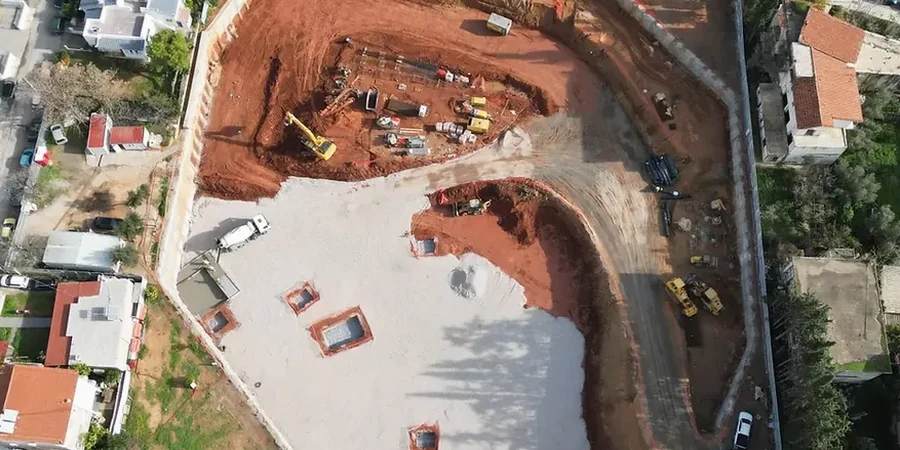
The types of projects in Ajax that necessitate this integrated category of services are diverse and growing. They range from municipal infrastructure upgrades, such as deep sewer and watermain tunnels and trenchless rehabilitation, to large-scale transit-oriented developments and commercial high-rises requiring multi-level underground parking. Industrial facilities often need deep excavations for storage or process pits, while environmental remediation projects may involve the excavation and containment of contaminated soils. Each application presents unique challenges, from managing vibrations and settlement near sensitive heritage structures to ensuring the waterproof integrity of a deep foundation in a high water table zone. The success of these projects hinges on a seamless connection between the initial geotechnical analysis, the adaptive design of support systems like soldier piles, secant walls, or shotcrete, and the real-time feedback loop provided by a dedicated monitoring program.
Questions and answers
What are the main geotechnical risks associated with underground excavations in Ajax?
The primary risks in Ajax stem from the variable overburden soils, particularly soft clays and silts that are prone to instability when dewatered. Ground loss, basal heave, and excessive settlement can damage adjacent foundations and utilities. Shallow bedrock transitions and potential artesian conditions in buried valleys add complexity, requiring robust shoring design and vigilant monitoring to manage lateral movement and prevent sudden collapse.
Which Ontario regulations directly govern the design and safety of deep excavations?
The Ontario Building Code (OBC) sets structural and geotechnical requirements for excavations and shoring. Professional engineering work must follow the Professional Engineers Act. For occupational safety during construction, the Ontario Health and Safety Act's regulations for excavations, trenches, and confined spaces are strictly enforced. Municipal permit approvals in Ajax require sealed geotechnical reports confirming compliance with these standards.
How does continuous monitoring improve the safety of an underground excavation project?
Continuous monitoring provides real-time data on ground movement, water pressure, and structural loads, allowing engineers to verify design assumptions and detect anomalies long before they become critical failures. Instruments like inclinometers, piezometers, and settlement points create a feedback loop that enables proactive design adjustments, ensures public safety, and provides the documentation required for regulatory compliance and community assurance.
What is the typical process for designing a support system for a soft soil tunnel in Ajax?
The process begins with a comprehensive geotechnical investigation to define soil strength, stiffness, and groundwater conditions. This data feeds into numerical models to predict ground behavior and face stability. The design then selects an appropriate support system, such as sequential excavation with shotcrete linings or a tunnel boring machine with earth pressure balance, tailored to the local geology to control settlement and ensure long-term integrity.