Road geotechnics in Ajax, Ontario, encompasses the engineering discipline that bridges the gap between pavement structures and the underlying ground conditions. This specialized field addresses the unique challenges posed by the regional soils, groundwater regimes, and climatic stresses that directly influence the long-term performance of transportation infrastructure. For a rapidly growing municipality within the Greater Toronto Area, where residential subdivisions and commercial corridors are expanding, a thorough geotechnical investigation is not merely a regulatory checkbox; it is a fundamental requirement to prevent premature pavement failure, excessive rutting, and frost-induced degradation. Proper road geotechnics ensures that arterial roads, collector routes, and local streets can withstand the heavy loading imposed by construction traffic and daily commuter volumes without compromising the subgrade integrity.
The local geology of Ajax is dominated by deposits left behind by the glacial Lake Iroquois, resulting in a complex stratigraphy that typically includes interbedded layers of silty clay, clayey silt till, and sand lenses. These fine-grained soils often exhibit high moisture retention and low bearing capacity, making them particularly susceptible to volume changes during freeze-thaw cycles. The presence of a relatively shallow groundwater table, especially in areas adjacent to the Lake Ontario shoreline and Duffins Creek watershed, further complicates subgrade stabilization. Without rigorous CBR study for road design protocols, engineers risk constructing pavements on subgrades that will soften and lose structural support during the spring thaw, leading to costly alligator cracking and pothole formation within the first few service years.
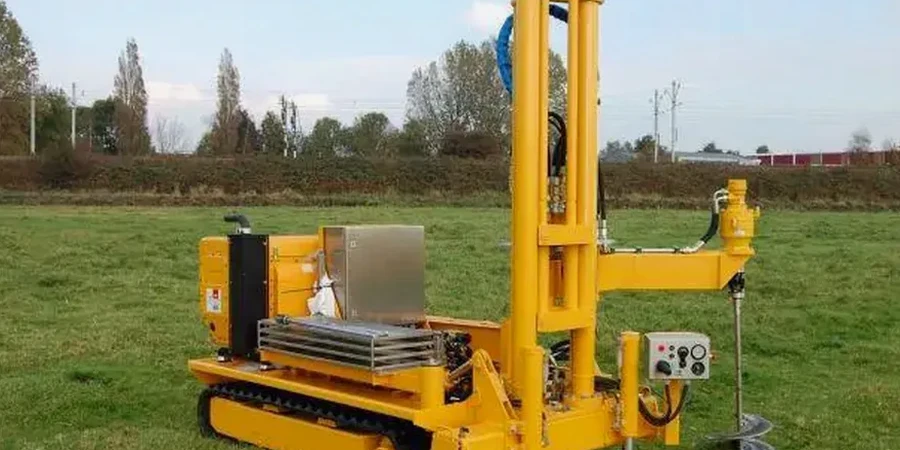
All road geotechnical works in Ajax must conform to the standards set forth by the Ontario Provincial Standards for Roads and Public Works (OPS), supplemented by the Ontario Traffic Manual and municipal specifications. The Ministry of Transportation of Ontario (MTO) pavement design methodology, particularly the mechanistic-empirical approach, governs the structural analysis. Crucially, Ontario Regulation 406/19 under the On-Site and Excess Soil Management Act dictates how native soils must be characterized, excavated, and reused during grading operations. Compliance with these regulations requires comprehensive geotechnical testing to classify excavated materials and ensure that structural fills meet the compaction thresholds specified in OPSS 206 and OPSS 501, preventing differential settlement beneath the pavement crust.
These geotechnical inputs are critical across a diverse range of project typologies throughout Ajax. Whether it is the design of new collector roads in the Northeast Ajax growth area or the rehabilitation of legacy infrastructure in the established Pickering Village district, the pavement structure must be tailored to the subgrade’s mechanical response. For high-traffic intersections and bus rapid transit lanes, rigid pavement design often becomes the preferred solution due to its ability to distribute loads over weaker silty subgrades and resist the tensile stresses that cause fatigue in asphalt layers. Conversely, for the majority of low-speed residential subdivisions, a properly calibrated flexible pavement design provides a cost-effective solution, provided the granular base and asphalt thicknesses are optimized based on accurate California Bearing Ratio values and frost penetration depth calculations. The integration of geogrid reinforcement or subgrade lime stabilization is frequently mandated when the in-situ soils fail to meet the structural number requirements defined in the MTO’s Pavement Design and Rehabilitation Manual.
Questions and answers
Why is a geotechnical investigation mandatory before road construction in Ajax?
A geotechnical investigation is essential in Ajax due to the prevalence of glacially deposited silty clays and high groundwater tables near Lake Ontario. Ontario Regulation 406/19 mandates proper soil characterization for excess soil management, while the MTO pavement design methodology requires accurate subgrade strength parameters to prevent structural failure caused by frost heave or differential settlement during seasonal freeze-thaw cycles.
How does the glacial geology of Ajax impact pavement structural design?
The Lake Iroquois plain left behind fine-grained, moisture-sensitive soils that exhibit low bearing capacity when saturated. This geology necessitates robust drainage systems and often requires subgrade stabilization techniques. Without accounting for these local lacustrine deposits, flexible pavements are prone to severe rutting, and rigid pavements may experience faulting due to non-uniform subgrade support.
What Ontario standards govern road geotechnics and pavement testing in Ajax?
Road geotechnics in Ajax is governed by the Ontario Provincial Standards (OPS), specifically OPSS 206 for granular materials and OPSS 501 for compaction. The Ministry of Transportation of Ontario (MTO) provides the mechanistic-empirical design framework, while O. Reg. 406/19 controls the reuse and disposal of native soils excavated during site grading and roadbed preparation.
What are the main risks of ignoring subgrade conditions when designing roads in the Durham Region?
Ignoring subgrade conditions in the Durham Region, including Ajax, typically leads to premature pavement distress such as extensive alligator cracking, deep rutting, and spring breakup. The high plasticity index of the native silty clays causes volume instability under moisture variation, resulting in a loss of structural number that forces municipalities to impose load restrictions or execute costly full-depth reconstructions years before the design life expires.