Geotechnical laboratory testing forms the backbone of any successful construction or infrastructure project in Ajax, Ontario. This category encompasses a suite of physical and mechanical tests performed on soil and aggregate samples to quantify their engineering properties. From determining how a soil will compact under load to assessing its drainage capacity, laboratory analysis transforms raw field samples into actionable engineering data. In Ajax, where urban expansion meets sensitive natural environments, accurate lab results are not merely a formality—they are a critical risk-management tool that underpins foundation design, slope stability assessments, and long-term infrastructure resilience.
The local geology of Ajax presents a distinctive testing environment shaped by its position within the South Slope physiographic region and its proximity to Lake Ontario. Subsurface conditions here are dominated by glacial deposits, including dense Halton Till and extensive layers of glaciolacustrine silts and clays deposited by the ancestral Lake Iroquois. These fine-grained soils often exhibit challenging characteristics such as high compressibility and potential volume change with moisture fluctuation. Consequently, tests like the Atterberg limits become indispensable for identifying the plasticity range of these silts and clays, directly informing predictions about shrink-swell behavior and seasonal ground movement that can affect shallow foundations and road bases across Durham Region.
Regulatory compliance in Ajax mandates strict adherence to provincial and national standards, primarily the Ontario Provincial Standard Specifications (OPSS) and the Canadian Foundation Engineering Manual, which reference ASTM International and CSA Group methodologies. All laboratory procedures must be conducted under the umbrella of a quality management system, typically conforming to MTO Laboratory Testing Manual requirements for transportation projects and the Ontario Building Code for structural applications. For instance, compaction control on municipal infrastructure demands Proctor tests (Standard or Modified) to establish the moisture-density relationship, ensuring engineered fills meet the 95% to 100% relative compaction thresholds specified in OPSS.MUNI 206. This regulatory framework ensures that laboratory data generated in Ajax is legally defensible and technically reproducible.
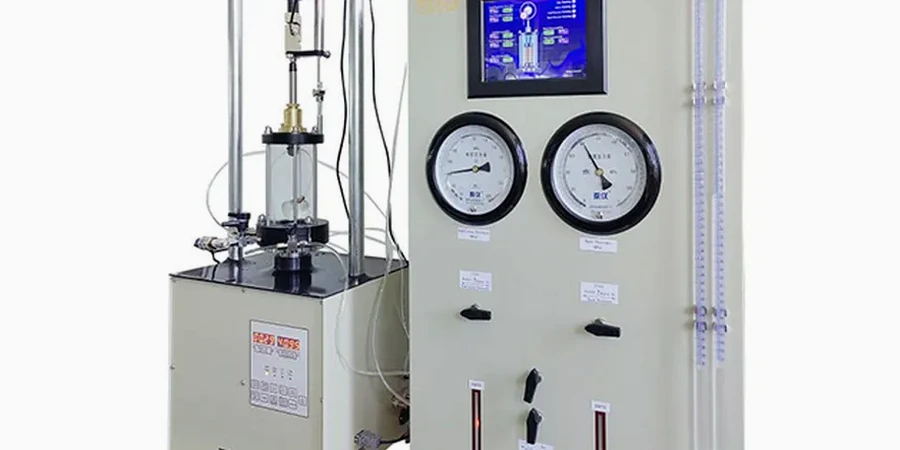
The scope of projects driving demand for laboratory services in Ajax is broad, spanning residential subdivisions in the Carruthers Creek corridor, mid-rise developments along Harwood Avenue, and major public infrastructure like the Duffins Creek Wastewater Treatment Plant expansion. Before a shovel hits the ground, a comprehensive testing program is executed. Shear strength parameters derived from a triaxial test are essential for designing deep excavations and retaining walls in the overconsolidated glacial deposits, while a grain size analysis (sieve + hydrometer) provides the full particle-size distribution curve needed to assess frost susceptibility and drainage characteristics for road subgrades and stormwater management facilities. These tests collectively inform geotechnical reports that govern earthworks specifications and structural loading assumptions.
Questions and answers
What is the typical turnaround time for a standard geotechnical laboratory testing package in Ajax?
Turnaround times depend on the specific tests requested and current laboratory workloads. A basic suite including moisture content, grain size analysis, and Atterberg limits can often be completed within 5 to 7 business days. Tests requiring extended curing or multiple stages, such as triaxial shear with pore pressure measurement or long-term consolidation testing, may require 2 to 4 weeks to allow for proper saturation and shearing phases.
How should soil samples be handled and transported to the Ajax laboratory to maintain integrity?
Disturbed samples for classification or compaction testing should be sealed in heavy-duty plastic bags and transported in rigid containers to minimize moisture loss. Undisturbed Shelby tube samples for shear or consolidation tests are highly sensitive; they must be kept upright, protected from vibration and extreme temperatures, and delivered to the laboratory promptly. Chain of custody documentation is mandatory for all samples to ensure traceability.
What laboratory tests are required by the Ontario Building Code for foundation design in Ajax's clay soils?
The Ontario Building Code requires a geotechnical investigation that typically includes laboratory determination of undrained shear strength via unconfined compression or triaxial testing, Atterberg limits to assess soil plasticity and potential for volume change, and moisture content. For the sensitive glaciolacustrine clays found in Ajax, consolidation testing is often additionally specified to calculate total and differential settlement under the proposed structural loads.
What is the difference between a Standard Proctor and a Modified Proctor compaction test?
The primary difference lies in the compactive effort applied. The Standard Proctor test uses a 5.5 lb hammer dropped 12 inches in three layers, simulating lighter compaction equipment. The Modified Proctor applies a significantly higher effort using a 10 lb hammer dropped 18 inches in five layers, replicating modern heavy vibratory rollers. The Modified Proctor typically yields a higher maximum dry density at a lower optimum moisture content and is commonly specified for major highway and heavy-load infrastructure projects in Ontario.