When the excavator arrives on a residential lot in Ajax, the first thing we do is check the cut. The Durham Region has a way of surprising you—what looks like stable till can turn into soft, wet clay two meters down. We’ve designed retaining walls for everything from modest garden terraces near Pickering Village to full-height basement walkouts backing onto Duffins Creek. The process starts with a test pit to log the stratigraphy and grab undisturbed samples. For deeper walls exceeding three meters, we typically run an SPT drilling program to quantify stiffness and check for loose zones before committing to a section geometry. The goal is never just a wall that stands—it’s a wall that won’t move, tilt, or drain poorly over 25 winters.
A retaining wall in Ajax is a drainage problem first, a structural problem second—if you don't control the water, the wall is temporary.
Process and scope
Local ground factors
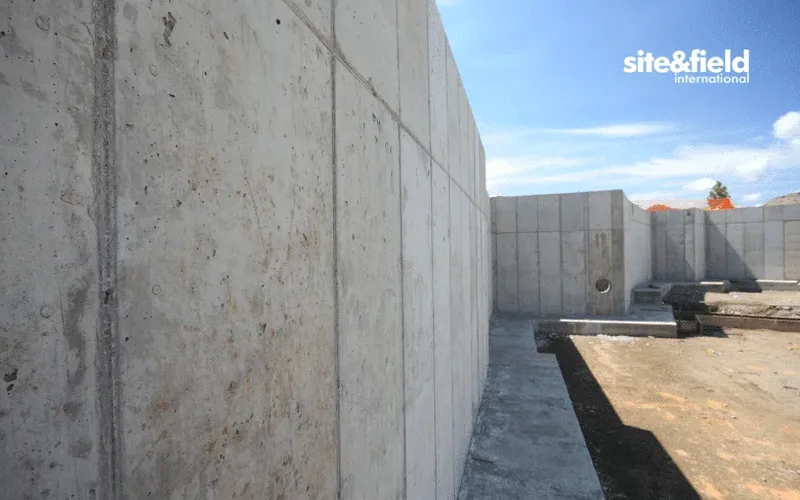
The Ontario Building Code references NBCC 2020 and CSA A23.3 for structural concrete, but the geotechnical assumptions underneath matter more than the rebar schedule. In Ajax, the biggest risk we see is inadequate drainage behind the wall—clogged weeping tile, missing filter fabric, or backfill with too many fines. Hydrostatic pressure builds up, and even a well-reinforced wall starts leaning. The second risk is underestimating the surcharge: a driveway, a pool, or a neighboring foundation within the influence zone can double the lateral earth pressure. We’ve investigated walls where the contractor skipped the drainage inspection, and within two seasons the wall had rotated past 2 degrees. Remediation is always more expensive than doing the granular backfill and filter separation correctly the first time.
Reference standards
NBCC 2020 (National Building Code of Canada), CSA A23.3:19 (Design of Concrete Structures), CFEM 2006 (Canadian Foundation Engineering Manual), ASTM D698 (Standard Proctor for backfill compaction), Ontario Building Code (frost protection requirements)
Other technical services
Subsurface Investigation for Wall Design
Test pitting, SPT drilling, and laboratory testing to characterize the retained soil and foundation bearing stratum before wall geometry is finalized.
Structural and Geotechnical Wall Design
Reinforced concrete cantilever, gravity, and segmental block wall design per CSA A23.3 and CFEM, including global stability checks and bearing capacity verification.
Construction Review and Drainage Inspection
On-site verification of backfill compaction, filter fabric placement, and weeping tile installation to ensure the as-built condition matches the design intent.
Typical parameters
Questions and answers
What type of retaining wall works best for the clay soils in Ajax?
For the Halton Till and Lake Iroquois deposits common in Ajax, reinforced concrete cantilever walls typically offer the best long-term performance. The till provides decent bearing capacity—often 150 kPa or more—but its silt content demands excellent drainage. Segmental block walls can work for heights under 2 meters if the foundation is properly prepared and geogrid reinforcement is used, but they are less forgiving of poor drainage than a monolithic concrete stem.
Do I need a building permit for a retaining wall in Ajax?
In the Town of Ajax, a building permit is generally required for retaining walls exceeding 1.0 meter in height, or walls supporting a surcharge such as a driveway or building. Walls under 1.0 meter may still require a permit if they affect drainage patterns or are located near property lines. Always confirm with the Town's Building Division before starting excavation.
How much does retaining wall design cost for a residential project in Ajax?
For a typical residential retaining wall in Ajax, the design package—including site investigation, engineering analysis, and stamped drawings—ranges from CA$1,360 to CA$5,990. The spread depends on wall height, complexity, and whether drilling or just test pitting is needed. Taller walls over 3 meters with surcharge loading fall toward the upper end.
How do you handle groundwater behind the wall?
Groundwater control is the single most important detail. We specify a continuous weeping tile at the base of the wall, wrapped in filter fabric and surrounded by clean granular backfill with less than 5 percent fines. A chimney drain layer connects the backfill to the weeping tile. For walls in Ajax where the water table is high—common near Duffins Creek and the lakefront—we may add a waterproofing membrane on the retained side and increase the drainage capacity.